
Sell With Confidence
Mid-Mo Home Sellers Guide
A practical guide to preparing, pricing, marketing, negotiating, and closing a home sale in Mid-Missouri.
Much like our buyer's guide, it would have been easy to make this one big advertisement that I hoped people would read, but the goal was really to provide what I hope is useful information. Though it is based on how we approach a sale, it applies to anyone looking to sell their home.
If you find it useful, I hope that you will give us a call and let us explain what we can do for you.
— Matt
Selling a home is not just about putting it on the market and waiting for an offer. A good sale starts with understanding what the sale needs to accomplish. Let's look at some different scenarios and see how they can change the approach.
There are many reasons for selling. Maybe you are ready for a larger home, maybe you are downsizing. You could be relocating, selling an inherited property, reducing expenses, moving closer to family, or simply ready for something different.
Those situations can lead to very different selling strategies.
The first concern is always price, and rightfully so. Nobody wants to take less than a home is worth, at least not without a good reason. A seller who already has their eye on the next home may make the opposite decision. Giving up $5,000 on the current sale could make perfect sense if it allows them to secure a property they do not want to lose; but a seller who inherited a vacant home may be perfectly comfortable leaving it on the market an extra month or two if there is a reasonable chance of earning another $5,000.
This goes into pricing as well as negotiations. Neither strategy is automatically right. The value of time depends on what the sale needs to accomplish.
This guide is designed to walk you through the selling process from that first decision through closing. We will explain what happens, what decisions you are likely to encounter, and where good advice can make a meaningful difference.
Start With What Happens After the Sale
Before worrying about paint colors, listing photos, or asking price, think about what you need the sale to do for you.
- Are you buying another home?
- Do you need the proceeds from this property before you can make the next move?
- Are you relocating on a particular schedule?
- Would you be comfortable moving twice if temporary housing became necessary?
- Are you selling a property you do not live in and therefore have more flexibility on timing?
- Would lowering your monthly housing expenses be more important than maximizing every possible dollar from the sale?
These questions matter because selling decisions are rarely made in isolation.
A seller who needs certainty will likely make different choices than one who has no deadline. A seller who is carrying an empty inherited property may view another month of taxes, insurance, utilities, and maintenance differently from someone continuing to live comfortably in their current home and preparing to relocate for retirement.
A strong selling strategy begins with the goal, not the house, and is informed by market conditions.
Talk to an Agent Before You Start Spending Money
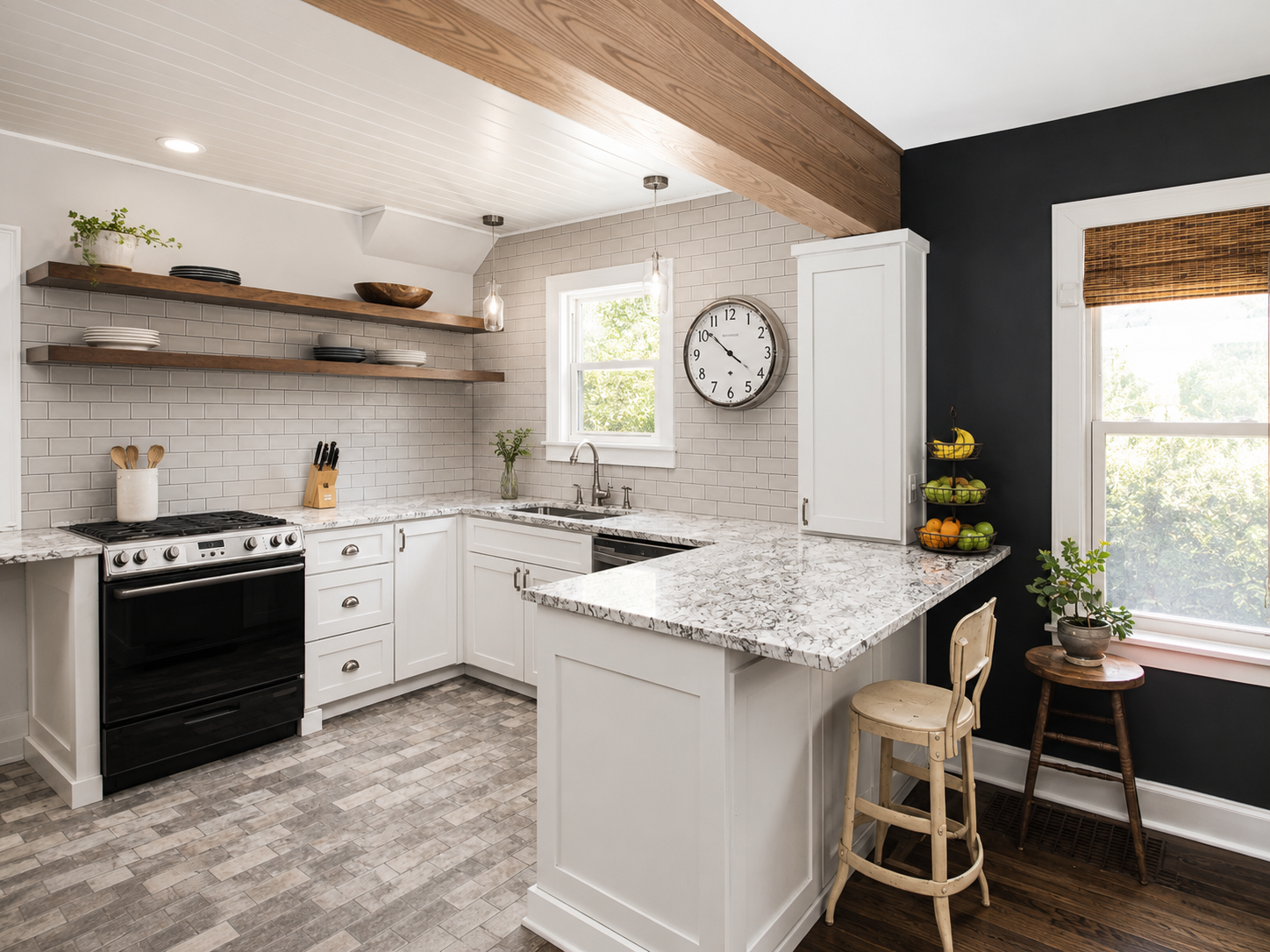
Once someone decides to sell, there is a natural temptation to start fixing things that range from lower-cost items like painting the bedrooms or installing new countertops to major updates like replacing carpet or renovating the kitchen. Even needed repairs like fixing a deck or replacing an appliance may not be necessary.
It's a good listing agent's job to explain the likely impact of those changes, not just have you fix everything because it will make their job easier. Remember, preparing a home for sale is not the same thing as making the home perfect.
If you are still deciding how much help you want from an agent, our Sell With Us page explains more about how we approach pricing, preparation, marketing, and representation.
Almost every property could be improved. The important question is whether an improvement is likely to help the sale enough to justify the time, money, and disruption required to complete it.
A freshly remodeled kitchen may make a home easier to sell, but that does not mean the seller will recover the cost of remodeling it.
Good Preparation Is Selective
At this point it's probably going to start sounding like I'm contradicting myself because some work often makes sense before listing.
Sometimes deferred maintenance, leaks, broken fixtures, damaged trim, safety concerns, neglected landscaping, or inexpensive cosmetic issues can distract buyers and make a home appear less cared for than it actually is. It's important to remember you're going up against the other houses on the market, or lately the lack thereof, not what the ideal house looks like.
One thing that almost always helps a sale is cleaning. A home that looks ready to move in makes a better impression on buyers. So can improving lighting, cutting back overgrown landscaping, touching up visibly damaged paint, or repairing something buyers are likely to notice immediately.
What Is the Home Likely to Sell For?
All of this leads us to the question every seller asks: What is my house worth?
As you can tell from the previous examples, there is rarely one perfect number. Like we discussed earlier, a seller who prioritizes a faster sale may choose one pricing strategy, while a seller with little time pressure may choose another.
The important thing is that pricing should serve the seller's actual goal.
To begin the pricing process, we look at recent comparable sales, current competition, property condition, location, features, market time, and how similar homes have been performing. We also look at the relationship between list prices and actual sale prices. Those pieces help us estimate where a property is likely to fit in the current market and what, if any, updates will benefit the seller. If you are early in the process and simply want a starting point, you can also request a home value review.
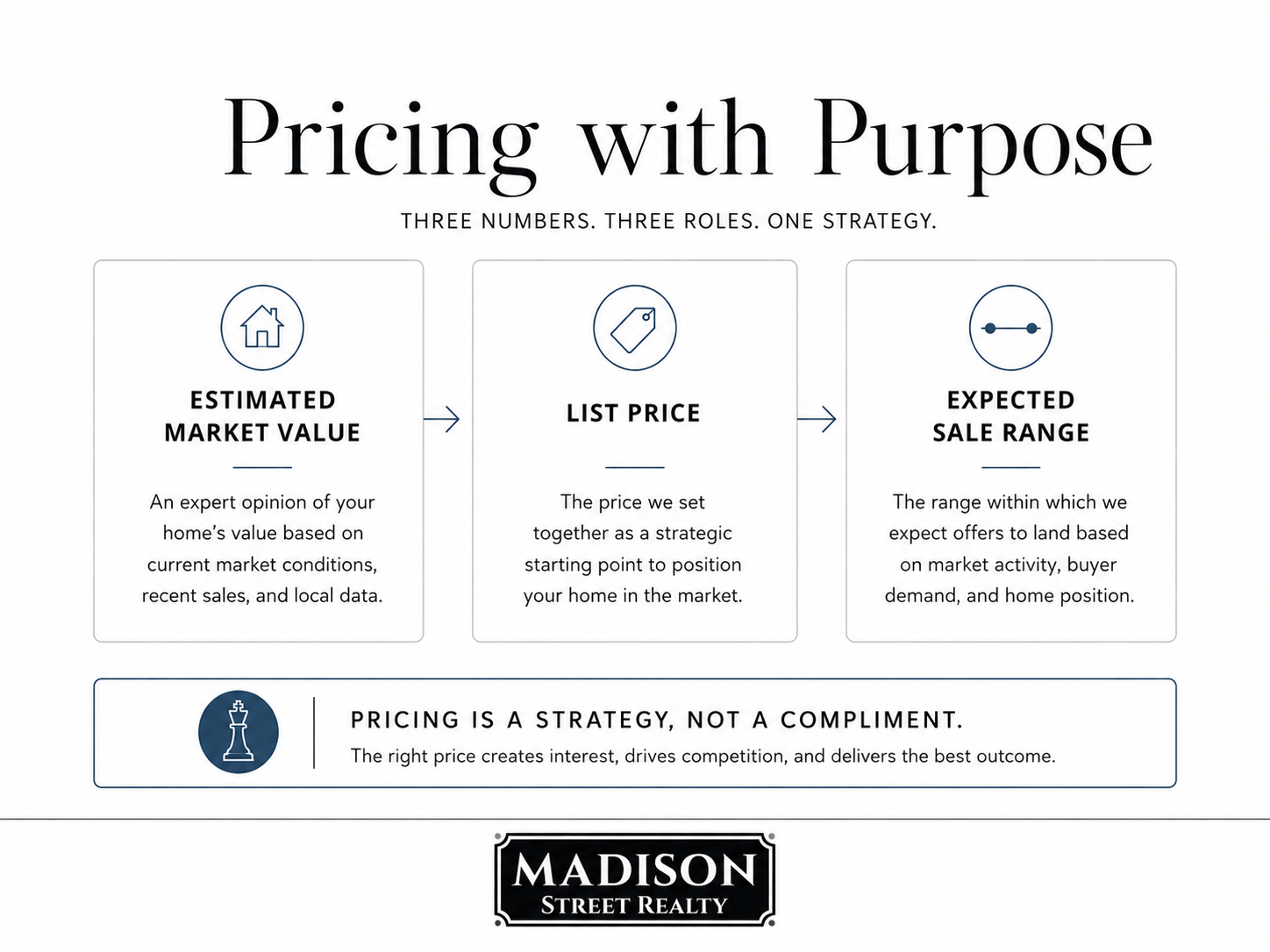
When discussing pricing, it is useful to distinguish among three related ideas:
Our opinion of what the property is likely to sell for based on the available market evidence.
The price at which the property is offered to the market based on your goals and the pricing strategy we choose.
Where we reasonably think a buyer may ultimately agree to purchase it.
Those numbers may be similar, but they do not have to be identical. A home may have an estimated market value of $200,000, but if it is in a slower-moving area and the seller needs to relocate quickly, they might choose to list at $185,000 to attract attention, shorten the marketing time, and possibly generate competing offers.
Don't Confuse the Highest Suggested Price With the Best Pricing Advice
When interviewing agents, it can be tempting to choose the one who suggests the highest list price. After all, everyone would rather hear that their home is worth more.
But a higher suggested price does not make it more accurate.
Ask how the agent arrived at the number. What comparable sales support it? What competing homes will buyers see? How long are similar properties taking to sell? And what happens if the market does not respond as expected?
A listing price should be a strategy, not a compliment.
What Will You Actually Walk Away With?
Sale price is important, but it is not the same thing as the money you receive at closing.
Before making major plans around a sale, it is helpful to estimate likely net proceeds.
Depending on the transaction, expenses may include:
- Mortgage payoff
- Brokerage compensation
- Title and closing expenses
- Taxes or prorations
- Seller-paid closing costs or concessions
- Repairs agreed to during the transaction
- Moving expenses
- Other transaction-specific costs
A seller thinking about buying another home may need this estimate to understand how much money will be available for the next purchase, whereas an estate may be more focused on net proceeds and carrying costs.
This is another reason the strategy starts with what happens after the sale.
Build the Selling Strategy Around the Goal

Once we understand the property's likely value, preparation needs, and what you want the sale to accomplish, we can make better decisions about timing.
There is no universal rule saying every seller should list immediately, wait until spring, sell before buying, or buy before selling. The right approach depends on the circumstances.
- If you have no deadline, you may have more flexibility to test the market.
- If you are relocating for work, timing may matter far more.
- If the house is vacant, carrying costs may make speed more important.
- If you are purchasing another property, the availability of that next home may influence decisions on this one.
Sometimes maximizing price is the priority.
Sometimes certainty is more valuable.
Sometimes speed has real financial value.
That is opportunity cost, and it matters just as much to sellers as it does to buyers.
Getting the Home Ready to Show
Eventually, the preparation is done and the listing goes live.
That is when selling becomes much more real.
Until then, much of the process has been planning.
Now strangers are going to walk through your home.
Secure Valuables and Private Information
Anything valuable, dangerous, private, or easily removed should be secured before showings begin, including firearms, jewelry, cash, prescription medications, financial documents, identification, spare keys, small electronics, and sensitive paperwork.
Plan for Pets
When possible, removing pets during showings is usually easiest. When that is not practical, make sure your agent knows where they will be and whether buyers should avoid certain rooms, gates, or doors.
Expect Some Inconvenience
Showings do not always happen at convenient times. You still live there, but reasonable availability generally helps serious buyers consider the property.
Give Buyers Space
In most situations, sellers are better off leaving the property during a showing.
Buyers are usually more comfortable looking around, asking questions, and discussing the property when the owner is not present.
Your agent can handle the showing process and follow up afterward.
The Market Starts Talking Back
Once showings begin, the market starts giving us information.
One buyer's opinion does not necessarily mean much.
Patterns do.
- Showing activity
- Repeat showings
- Buyer feedback
- Offers
- New competing listings
- Recent sales
- Time on market
- Changes in market conditions
Good pricing strategy is not something that happens once on listing day. It is something we continue to evaluate as the market responds.
An Offer Arrives
Eventually, the phone rings.
You have an offer.
The natural reaction is to look at the price first.
Price matters, but the highest price is not always the best offer.
A good offer should be evaluated as a complete package. Depending on the transaction, we may consider:
A slightly lower offer with strong financing, fewer complications, and a closing date that fits your needs may be better than a higher offer carrying substantially more risk, especially if time is a factor.
The best offer is the one that best serves your overall goal, not simply the one with the largest number at the top.
Negotiation Does Not End When You Accept
An accepted offer is a major step, but it does not mean every part of the transaction is settled.
Inspections, financing, appraisal, title work, and other contingencies may still need to be completed. Next we will work through the most common things that come up during the sale.
Inspections and Repair Requests
A professional home inspection often produces a long report.
That does not mean the house is falling apart.
Inspectors are paid to identify conditions, maintenance items, safety concerns, and potential problems.
When a buyer submits a repair request, we help evaluate the request in the context of the property, the contract, the market, and the overall transaction.
- Sometimes making a repair is the easiest solution.
- Sometimes a financial concession makes more sense.
- Sometimes the request is unreasonable.
- Sometimes a newly discovered issue is significant enough that compromise is worthwhile to keep a strong transaction together.
What response best protects the seller's interests and keeps the transaction moving on acceptable terms?
The Appraisal and Buyer Financing
If the buyer is financing the purchase, the lender may require an appraisal.
The appraisal is primarily for the lender, but it can affect the seller if the appraised value comes in below the agreed purchase price.
What happens next depends on the contract and the parties involved.
- The buyer may have the ability to renegotiate.
- The buyer may bring additional cash.
- The seller may agree to a lower price.
- The parties may split the difference.
- Or the transaction may not proceed.
This is one reason buyer financing matters when evaluating an offer.
The same is true of the loan itself. An offer is only valuable if the buyer can ultimately close.
A strong pre-approval, reasonable financing terms, and a qualified buyer can matter just as much as the headline price.
If You Are Buying Another Home
Many sellers are also buyers, but not all of them are.
If you are buying another home, the two transactions need to be considered together.
One of the first questions is whether you need proceeds from your current home to complete the next purchase.
Your lender can help determine whether you can qualify before selling, whether a sale contingency will be required, and how much flexibility you have.
From there, several strategies may be possible. The best approach depends on your finances, the market, the properties involved, and how much uncertainty you are comfortable carrying. If buying will be part of your next move, our Mid-Missouri Buyer’s Guide walks through that side of the process in more detail.
Sometimes accepting slightly less for your current home can make sense if it helps you secure the next property. Sometimes waiting is the better financial decision. The two transactions have to be evaluated together.
Plan for the Unexpected
Closings do not always happen exactly when everyone expects.
- A lender may need another document.
- A repair may take longer than expected.
- A title issue may need additional work.
- An appraisal may be delayed.
- A moving company may have limited availability.
- If two transactions are connected, one delay can affect the other.
That does not mean you should expect problems. It means you should avoid building a plan that only works if every moving part happens perfectly.
A little flexibility can prevent a small delay from becoming a major problem.
Preparing for Closing
As closing approaches, there are several practical items to finish.
- Any agreed repairs should be completed according to the contract.
- Personal belongings need to be removed unless otherwise agreed.
- Utilities and moving arrangements should be coordinated with the possession terms.
- Keys, garage-door remotes, access codes, and other property-related items should be gathered.
The buyer may conduct a final walkthrough shortly before closing to confirm the property is substantially in the expected condition.
This is not a second inspection. It is simply the buyer's opportunity to make sure the home has not materially changed and that agreed items have been addressed.
Closing Day
At closing, the documents necessary to transfer ownership are completed and funds are handled according to the transaction.
Existing mortgage balances and other applicable expenses are paid from the proceeds.
The remaining funds are distributed according to the closing documents.
Possession transfers according to the agreement.
Then the sale is complete.
For some sellers, that means immediately beginning the next chapter in another home.
For others, it means something entirely different.
The goal was never simply to sell the property. It was to complete the sale in a way that helped you accomplish whatever came next.
Thinking About Selling?
You do not need to know your exact moving date before talking with us.
In fact, the best time to discuss repairs, pricing, timing, and what your home may be worth is often before you have made those decisions.
If you would like to hear more about how we put together a selling strategy and how we market properties, you can learn more about selling with Madison Street Realty or simply reach out when you are ready.